Foundation’s Update 1.9 is finally available on GOG and Steam.
The team has been hard at work to bring you quality content as part of a new and improved gameplay experience.
Here’s a quick overview of what’s included.
Village Aspirations
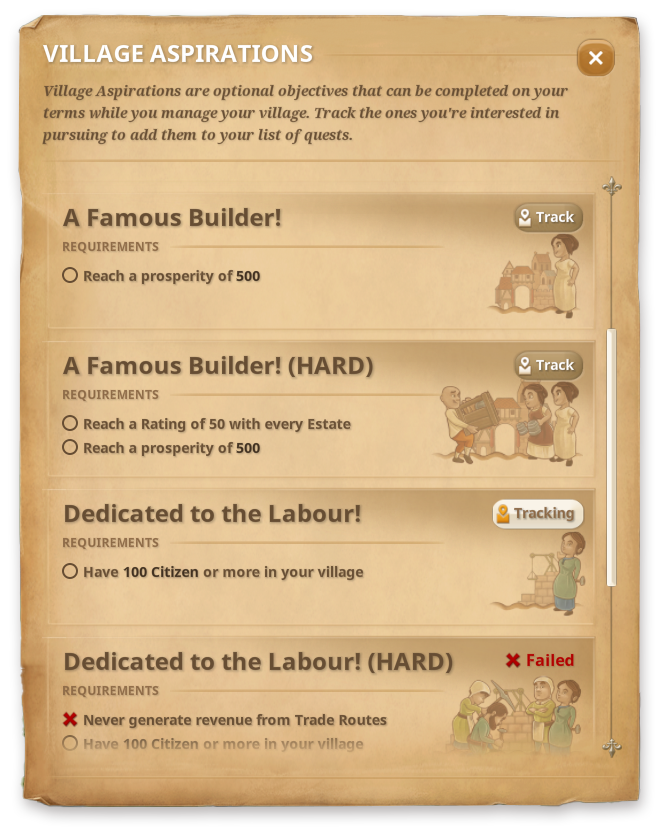
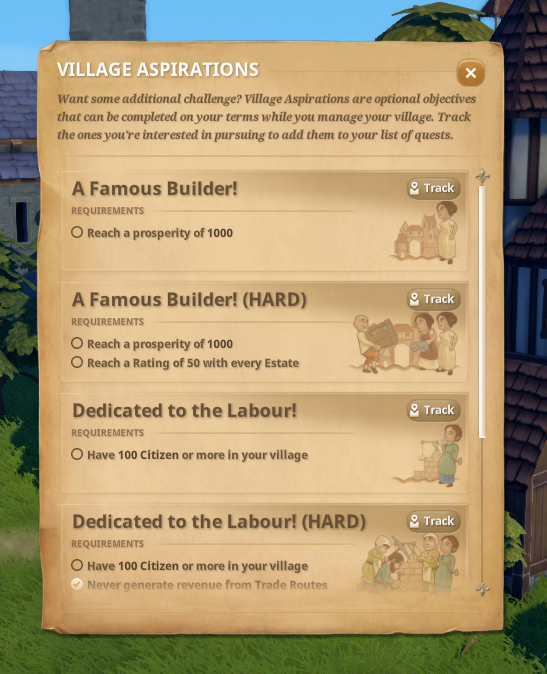
A fundamental aspect of Foundation is the customisation of your experience, which is reflected in the game by the organic growth that makes each village unique. With 1.9, we wanted to go one step further and give you the ability to achieve Village Aspirations: optional objectives that offer different ways to play in order to nab sweet GOG or Steam achievements. Examples include building an Abbatial Church or having 100 citizens in your village
Village Aspirations are another way for us to not only increase the replayability of Foundation, but also to make it a somewhat more challenging experience.
Progression revised from the ground up
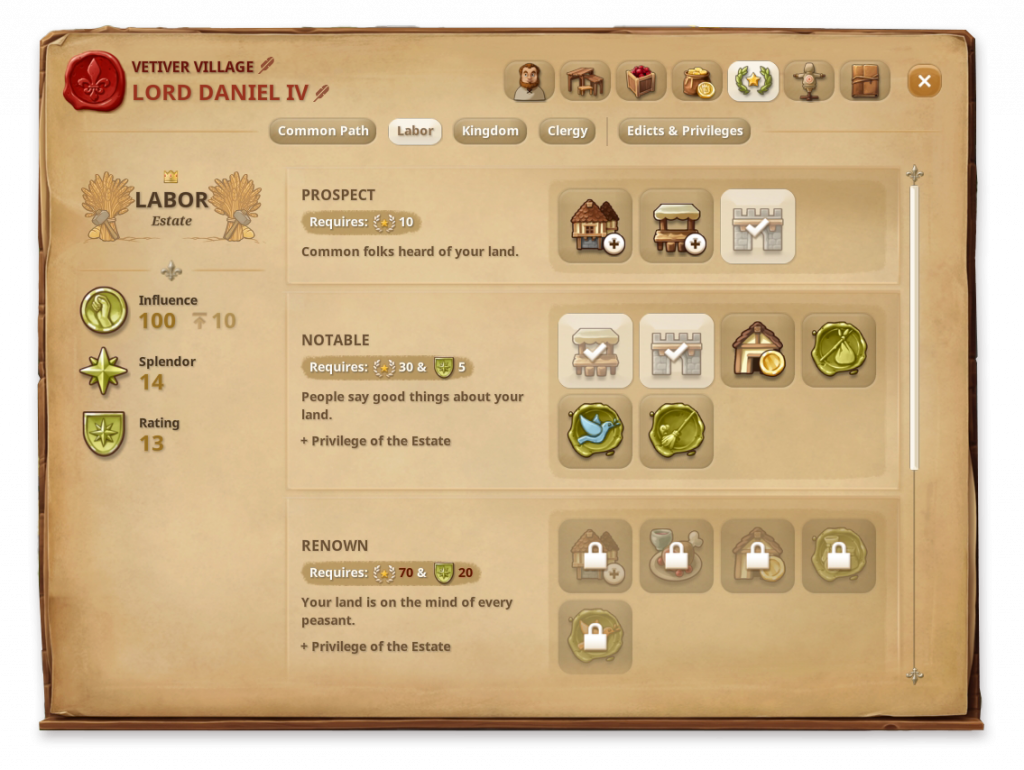
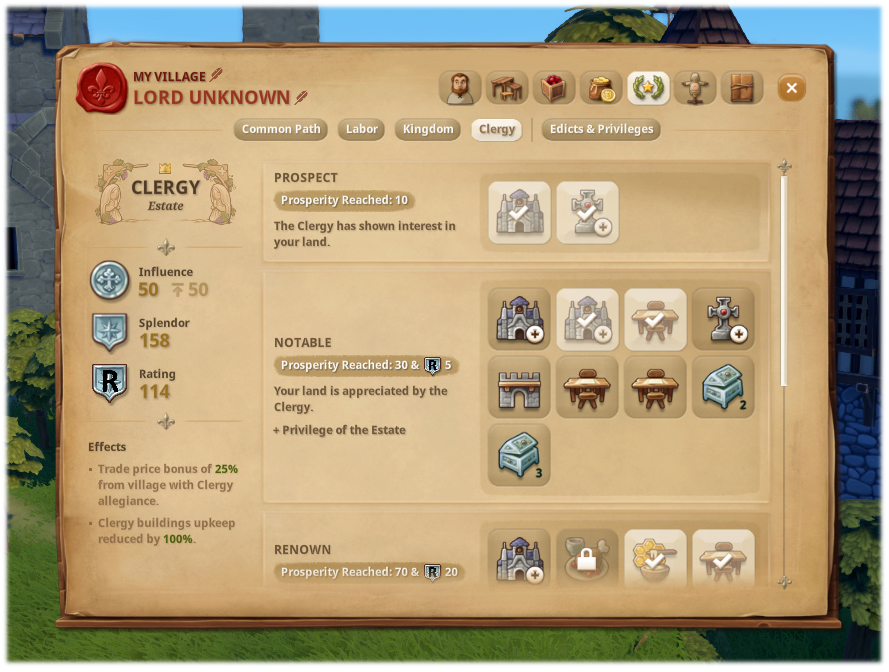
Update 1.9 changes several elements of Foundation, including the way you progress into the game. Now, each EstateUpdate 1.9 changes several elements of Foundation, including the way you progress into the game. Now, each Estate—whether it be Labour, Clergy or Kingdom—has several unlockables of its own. Investing influence in and thus favouring one Estate makes it more difficult to progress with the others. This dynamic requires more planning on your part and adds weight to your decisions without restricting your ambitions.
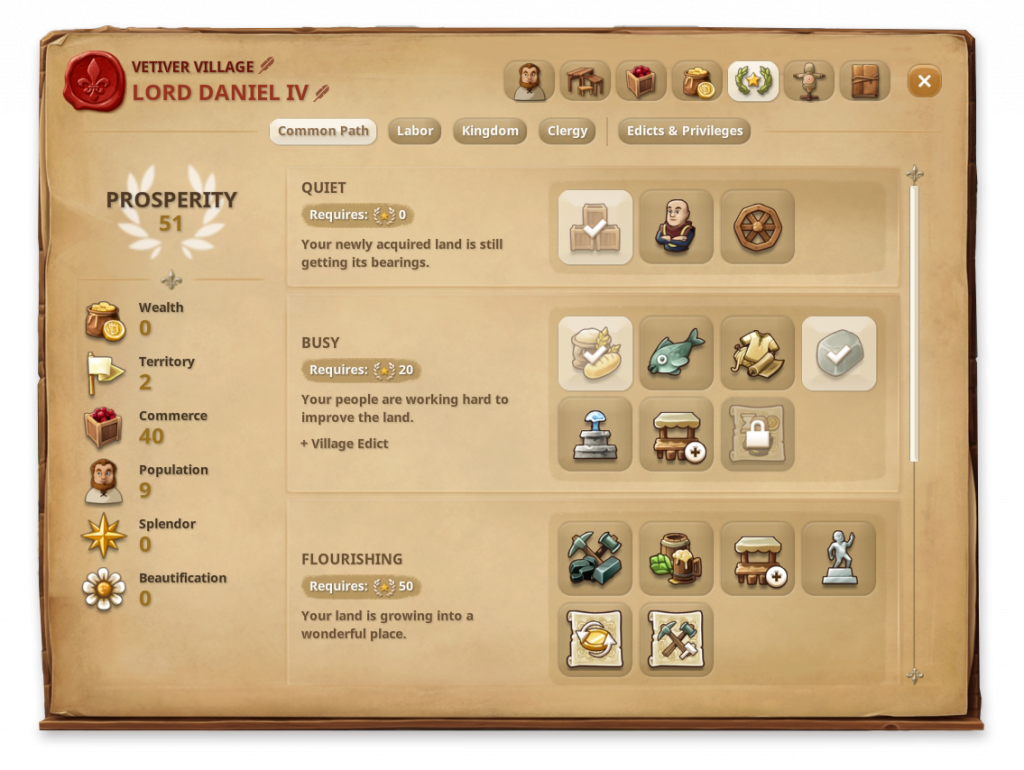
In addition to Estate-specific progression paths, there is also a common progression path, which includes quite a few essential production buildings in Foundation, such as the Warehouse, the Stonecutter Camp and the Fishing Hut. In e
In addition to Estate-specific progression paths, there is also a common progression path, which includes quite a few essential production buildings in Foundation, such as the Warehouse, the Stonecutter Camp and the Fishing Hut. In either case, you will need to reach different tiers of Prosperity before being able to unlock some of the most desirable options. This new measure of your success takes into account six factors: wealth, territory size, trade, population, splendor and beautification.
Our next updates will focus on upgrading both the Kingdom and Labor progression paths.
Edicts and privileges
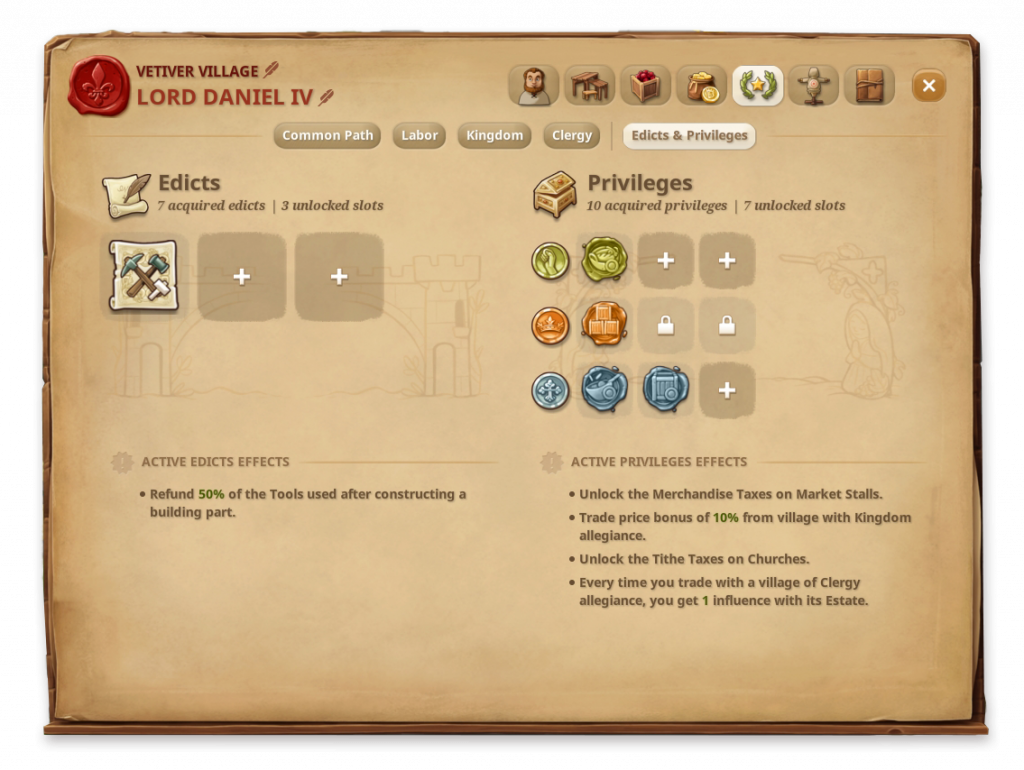
You may have noticed that the progression page has a tab dedicated to edicts and privileges. This is another new feature introduced with Update 1.9. The first case represents what may be described as laws that you enact in your village. The second case represents rewards given by the different Estates to their most loyal Lords or Ladies.
Edicts and privileges grant important boons such as reducing a Splendor penalty between two Estates, increasing the market value of certain resources or reducing the maintenance cost of production buildings by half. They are unlocked with coins or influence points. Afterwards, you just have to choose the edicts or privileges you want to activate.
Buildings and sub-buildings
The city-building aspect is at the heart of the Foundation experience, so we wanted to let you expand the capabilities of your buildings. You can now assign functions to a group of building parts (what we call sub-buildings) instead of individual parts. Each sub-building will therefore be linked to a single function (e.g. Treasury) which you can change should you desire so.
In a few words, this means that a Monastery can now be home to a Chapel, a Scriptorium, a Hospitium, a Monastic Garden and so on. The same goes for a Market, which you can expand by adding a sub-building associated with a separate function from the parent building if you wish, such as a Luxury Goods Stall. At any time, it is possible to browse each of the functions of a parent building thanks to the “Parts List” tab.
A glorious Monastery
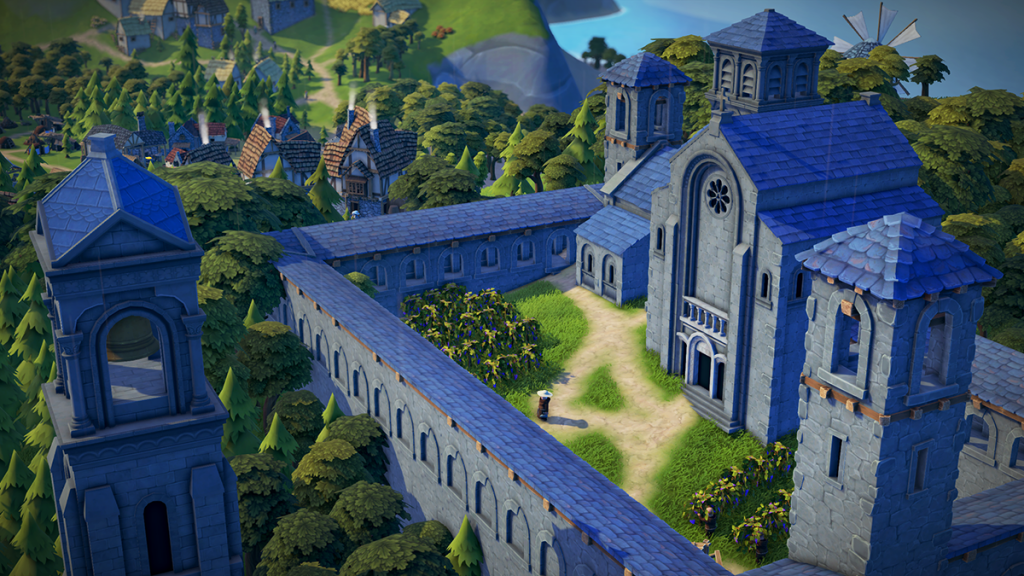
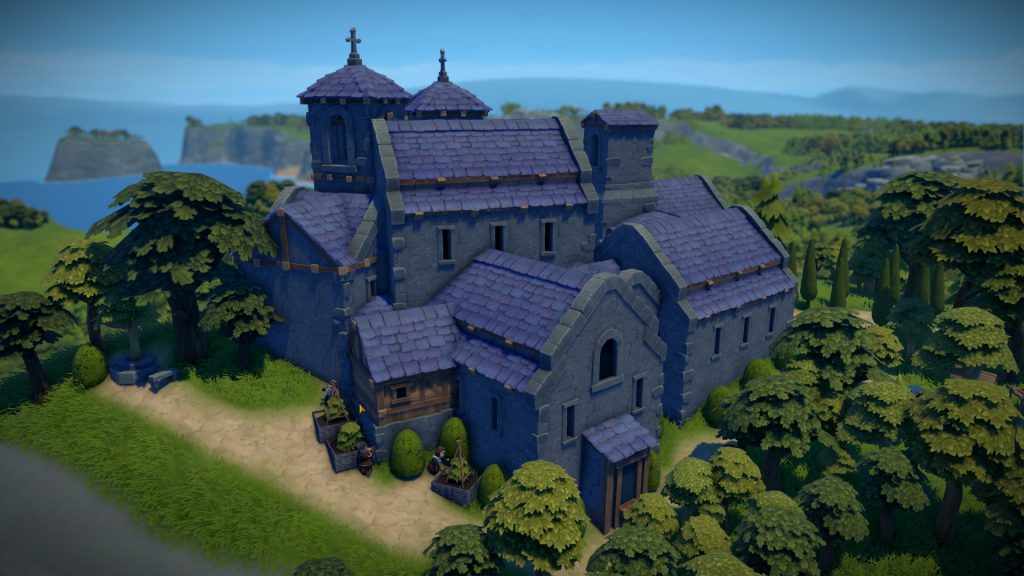
Progressing on the Clergy path, you’ll soon notice important changes. For starters, there are several new functions available, including a Hospitium that will host visitors, a Scriptorium that will help you produce Manuscripts used to promote your faithfuls or a Cloister where they can medidate while fulfilling a new need. Moreover, you will have the pProgressing on the Clergy path, you’ll soon notice important changes. For starters, there are several new functions available, including a Hospitium that will host visitors, a Scriptorium that will help you produce Manuscripts used to promote your faithfuls or a Cloister where they can meditate while fulfilling a new need. Moreover, you will have the pleasure of building a prettified Abbatial Church: our artists have done a great job upgrading its visuals for your enjoyment!
Taxation
Previously, Foundation’s economy was largely tied to market stalls. With Update 1.9, taxation replaces the main way to fill your coffers. The Manor House now has a Tax Office function, which is combined with the Tax Collector job. Each house accumulates coins over time, and it’s up to you to decide how heavily your village will be taxed. But beware: people are not too keen on having to pay much, so there is a balance to be struck so as not to collapse your global Happiness factor!
Even more modding possibilities
In keeping with our commitment to the modding community, we’ve outlined several new features that are sure to have a snowball effect in the coming weeks. Without getting too technical, the major changes to unlockables, the progression system and narrative choices will certainly result in the creation of mods that we’ll be happy to share with you!
Looking forward to a bright future
Foundation’s 1.9 update is multi-faceted and marks an important milestone in our Early Access (EA) journey. We hope you will enjoy how we reimagined some of the existing systems while adding more depth to the core medieval city-building experience.
As for what the future holds, in the short term work has already started on a first patch to fix newly discovered bugs. At a later date, and after focusing a lot on the Clergy progression path—particularly the Monastery—we want to give the other two Estates the attention they deserve. We plan to overhaul the Kingdom and Labor progression paths, in that order.. We will let you fill in the gaps as to what that might entail.
It’s been a while since we’ve posted on the blog, but today marks an important milestone in the development of Foundation and we couldn’t pass up such an opportunity. From now on and for a limited time, all players can participate in the public playtest of our upcoming 1.9 update!
Over the past few months, we’ve worked tirelessly to redesign some of the game’s core features and improve the overall experience.
We encourage you to playtest the Clergy progression path, which has been reworked the most. In a few words, what this means is that we’ve focused on this Estate in terms of unlockables and narrative for the time being. The Monastery—crown jewel of this Estate—has undergone several changes. You can now build new parts such as the Hospitium (to host visitors) and the Scriptorium (to produce manuscripts with copyists). You can also build Nun Dorms and yes, even concede female villagers to your monasteries!
A new Monastery awaits!
A crucial element of the 1.9 update is all about progression. Some buildings are now part of what we call a common progression path, i.e. without any investment towards a particular Estate. Others are linked to one of the three available Estates—Labor, Clergy or Kingdom—and require you to reach specific Splendor thresholds to be unlocked by spending Influence.
A preview of the Clergy progression path
The dynamics between Estates are very important in update 1.9. The more you invest in a particular Estate, the harder it becomes to progress with others’. This is our way of adding weight to your decisions, but it doesn’t mean you’ll be handcuffed to the Clergy should you choose this progression path, for example.
Update 1.9 introduces sweeping changes to Foundation, including to its economy, which is now largely tax-based—something that was attributed to markets in the past. You can now tax your villagers and send a tax collector to collect the precious coins that will soon fill your coffers. Trade remains another viable avenue for accumulating wealth; the introduction of upgradable trade routes makes all the difference! Oh, and military missions are still a surefire way to get valuable resources, as always.
Edicts and privileges change the rules of the game in your favor. Once unlocked, these options can, among other things, mitigate a penalty or improve your trade with a neighboring village. Be careful though: if you change your mind about a specific edict or privilege, you will need the help of a Bailiff.
Players looking for an extra challenge will be pleased to know that we’ve added Village Aspirations. These are long-term goals that you can try to achieve, with some of them being pretty hard! Eventually, we’d like to tie these goals to GOG/Steam achievements and give them a bit more fanfare. At this point though, their integration is not final, but gives a good idea of our intentions with this system.
A work-in-progress view of Village Aspirations
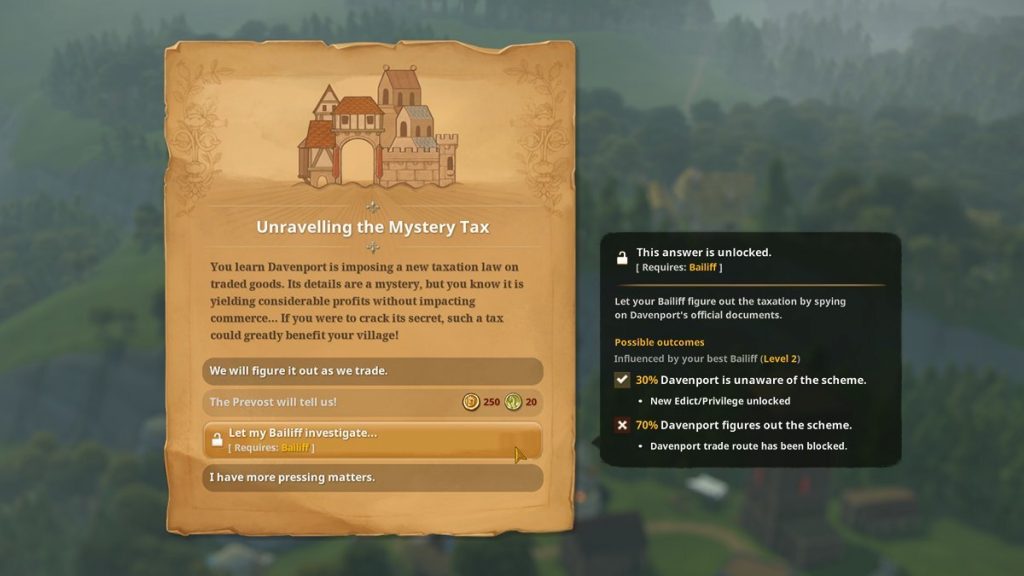
You will notice that narration plays a bigger role in Foundation than ever. Indeed, our Narrative Designer has been pretty busy and added a large number of interesting events and opportunities, ranging from hosting fairs to improving trades with neighbors and much, much more. In that same regard, players will feel they have more of a say as Lord/Lady thanks to the addition of more extensive narrative choices.
In order to better guide you through Foundation’s many interconnected systems, we’ve thought of a series of one-off (and entirely optional!) advice to guide you through your first steps as Lord or Lady—what we call Onboarding. This helps smoothes the learning curve and makes you feel more in control of your village’s development.
The 1.9 update includes lots of other new features and changes, but we want to leave you the pleasure of discovering them on your own terms. This post just skims over the scope of the changes to give you an updated look at Foundation.
You’ll soon notice that the game remains true to itself, but that its form has matured to a degree we’re very proud of. Expect a more detailed breakdown of the many new and improved features once the update is officially released to all Steam and GOG players around the world!
How can I participate in Foundation’s Update 1.9 Public Playtest on Steam?
Open the Steam client
Right-click on Foundation
Click on Properties
Click on BETAS
Under Select the beta you would like to opt into, choose preview
Launch the game
How can I participate in Foundation’s Update 1.9 Public Playtest on GOG?
Open the GOG client
Navigate to your owned games, then right-click on Foundation
Click Manage installation – Configure
Under Beta channels, choose Preview
Launch the game
Where can I talk about Foundation’s 1.9 Public Playtest?
General discussions take place on our official Discord server, in the dedicated #public-playtest-1-9 channel. You can report bugs or technical problems in the #bug-report-public-playtest-1-9 channel. If you would rather write us, please do so using the following email: support@polymorph.games. It’s always a pleasure to read about what you have to say!
Welcome back to yet another episode in our Modding Mondays series!
It’s already been a month since we last featured a popular fan-made mod here.
Today, we have the pleasure of talking about the Vegetable and Poultry Farms mod from creator Batyushki, whom you may remember from the Security mod we shared not so long ago.
Immersion is an important part of gaming: feeling like you’re part of the world and, to an extent, being able to engage in role-playing.
One way to achieve a greater level of immersion is by adding gameplay features that feel relevant without bloating what’s already in place. With Vegetable and Poultry Farms, Batyushki had two goals in mind: to add variety and a more realistic food supply for villages.
This was one of the first mods that I designed. I am a hobby farmer in real life and wanted to add some basic foods to the game. The mod has been through many versions and I’ve slowly improved and simplified it over time
-Batyushki
Agriculture and farming in the Medieval age were critically important: most peasants worked the land and played a key role in the production chain.
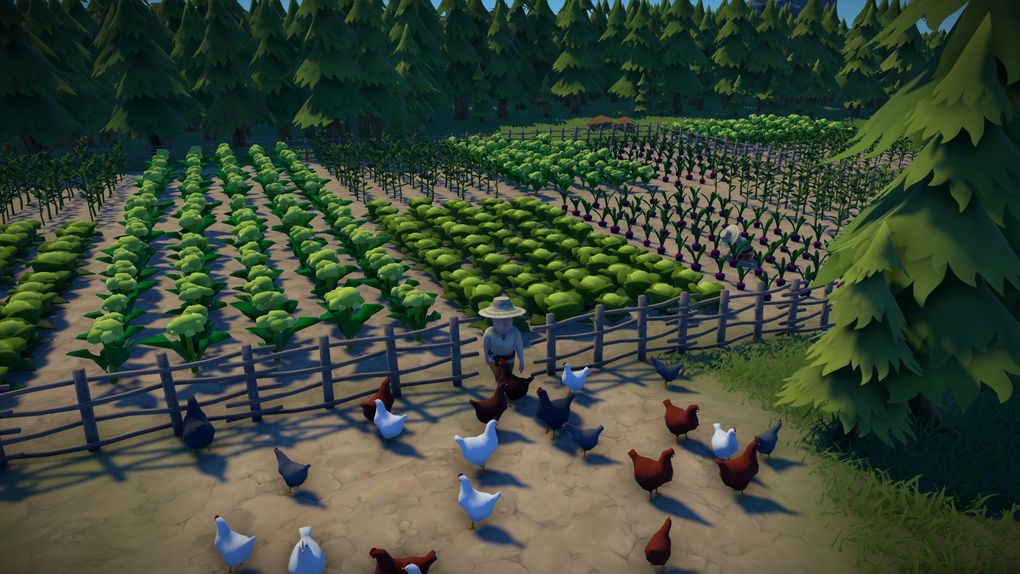
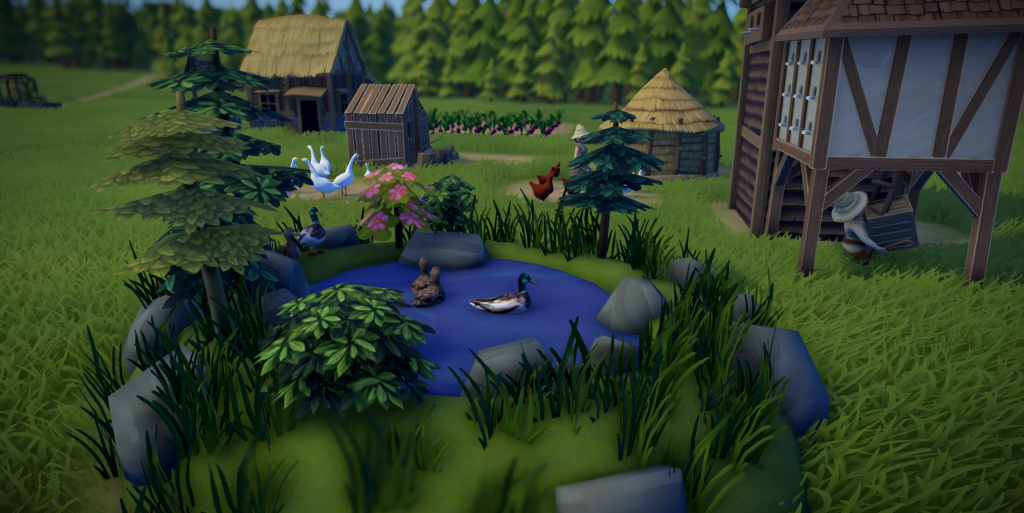
This mod introduces two major gameplay additions to Foundation. The first one, a poultry farm, is unlocked once you get 10 villagers. Once it has been built, you will be spawn chickens and geese (they respawn every two weeks).
Chickens produce eggs and poultry. The former is faster, but trades for less gold. On the other hand, geese, duck ponds and dovecotes produce only poultry. You want to keep that in mind once you start building your new poultry farms!
Additionally—and this is a nice touch—you collect dung from your animals using the dung heap. You can then turn dung into compost to grow your vegetables. The circle of life!
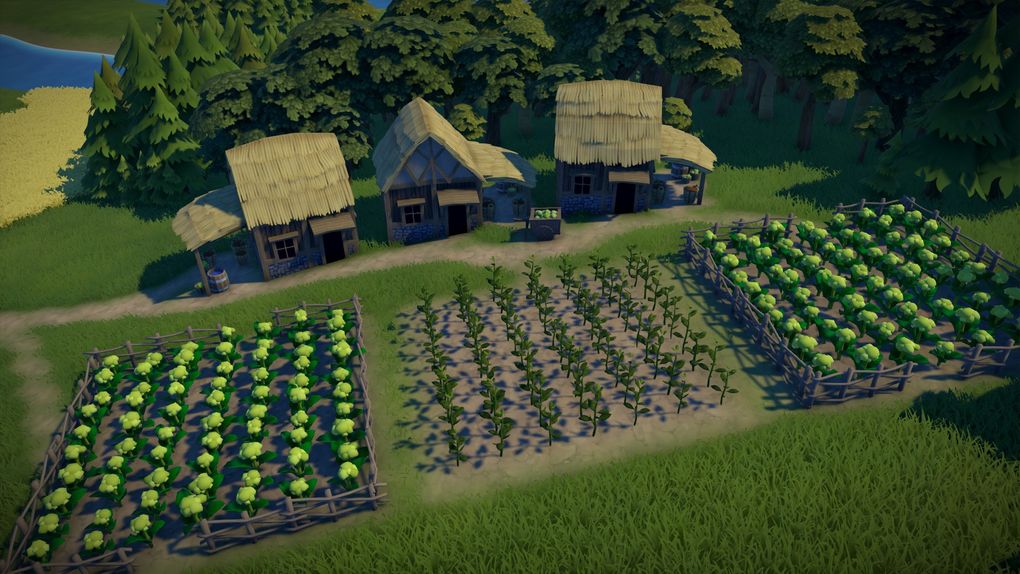
The other major inclusion from Batyushki’s mod are the vegetable farms. Unlocked once you get 20 villagers, you can build them according to your own taste just like wheat farms (by snapping together building parts in free-form) or use the simple, fixed farms.
The free-form farm requires both field workers and a processing worker, but produces more per acre of land than the simple field farms. Once you build a free-form farm you need to select which vegetable to grow, and paint the crop field.
Here’s a list of available vegetables:
Beets
Cabbage
Beans
Broccoli
Vegetables require compost (see above) and water to grow. Once you have vegetables ready for trade and stocked in a granary, you can add them to the vegetable cart, which acts as a market tender.
Creating the Vegetable and Poultry farm mod proved to be quite challenging. With a lot of hard work and the help of a fellow modder, Batyushki was able to see its completion:
One challenge with the mod was how to make the chickens and geese move. I knew this was technically possible but I didn’t know how to go about it. A fellow modder, Minotorious, created code that other modders can use to do simple movement animations. So in the end I didn’t have to solve the problem myself but was able to leverage the code Minotorious developed. I’m looking forward to many more collaborations with other modders going forward.
-Batyushki
We are always humbled to see such amazing content created for Foundation. The modding community is truly astonishing and we know it’s only going to get better as the game further evolves.
This week, we’re back with a fifth episode in our Modding Mondays series.
Foundation is a medieval city building game. Therefore, its buildings are at the heart of the gameplay. We can think of them as characters for the game who are all working together to give it a unique identity.
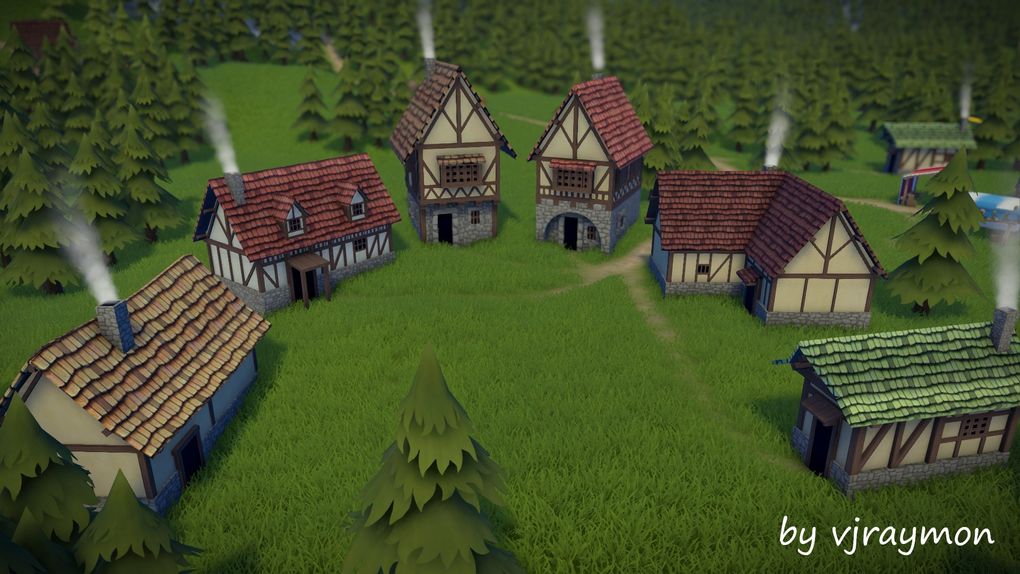
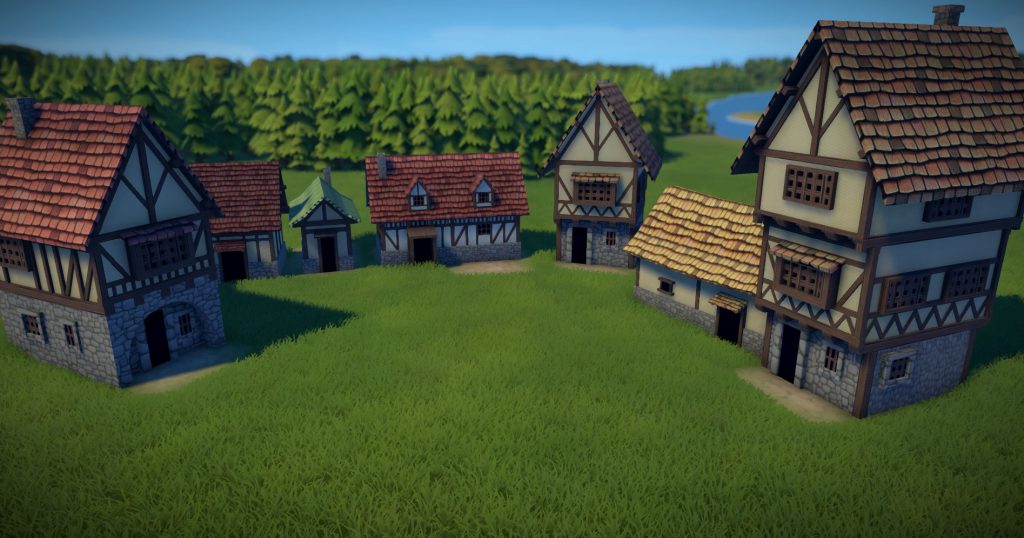
Something that truly inspired Vjraymon, a former IT professional who discovered his passion for modding through a co-worker. With House Addition V4, his goal was to offer more variety with Foundation’s architecture.
Modding new buildings for a city builder seemed like a no-brainer. I first added them to the so-called organic house system of the game, then I took inspiration from the Vanioville mod created by Arthas to populate them manually.
-Vjraymon
Here’s what the mod has to offer in terms of new possibilities for residential zoning:
Green house (4 slots)
Red Wine House (6 slots)
Red House (6 slots)
Charcoal House (6 slots)
Two Stories Charcoal House (8 slots)
One Story Red House (6 slots)
Yellow House (6 slots)
Another mod from Vjraymon allows you to manually place the new houses in your village, which is very interesting. As a reminder, Foundation villagers build houses by themselves in residential painted areas on your territory. The end result is entirely organic.
Like others before him, Vjraymon learned how to code mostly on his own, but also with the help of the community and developers here at Polymorph Games.
I learned to code in Lua with Foundation. At the beginning, I used examples provided with the game in addition to the help of Maxime and the modder Helron.
-Vjraymon
Today, this creator has more than 20 mods to his name. His biggest wish for the future of modding with Foundation? Being able to mod character animations beyond what we currently offer, i.e. move, rotate and scale.
Hello everyone and welcome to this fourth episode of our Modding Mondays series.
This week, we’ll share the discovery of Batyuski’s Security mod. This prolific creator has been credited for over 60 mods and shows no signs of slowing down.
What exactly is the Security mod, anyway?
The main idea behind the Security mod is to add a new layer of realism to our city builder while beefing up its challenge.
At the time of writing, Foundation’s vanilla experience (i.e. without mods) does not offer crime in any form or fashion.
Batyuski took this opportunity to add a whole new dynamic to the game: players are now able to protect their village from outlaws and punish them accordingly.
I have a huge list of mod ideas and spend a lot of time thinking about ways to make Foundation more true to medieval life while also keeping it fun. Castles and security played a central role in medieval towns and I always wanted to make a mod to replicate both the visuals and the functionality of a castle, and to introduce some mild challenges to the game in the form of outlaws.
-Batyushki
How do you protect your village?
When playing with the Security mod, you will have access to new buildings once you reach a population of 20 villagers. The most important one is undoubtedly the Constable’s Keep, which includes a prison part where outlaws will eventually be housed before being released a week later, jobless and with the Newcomer rank.
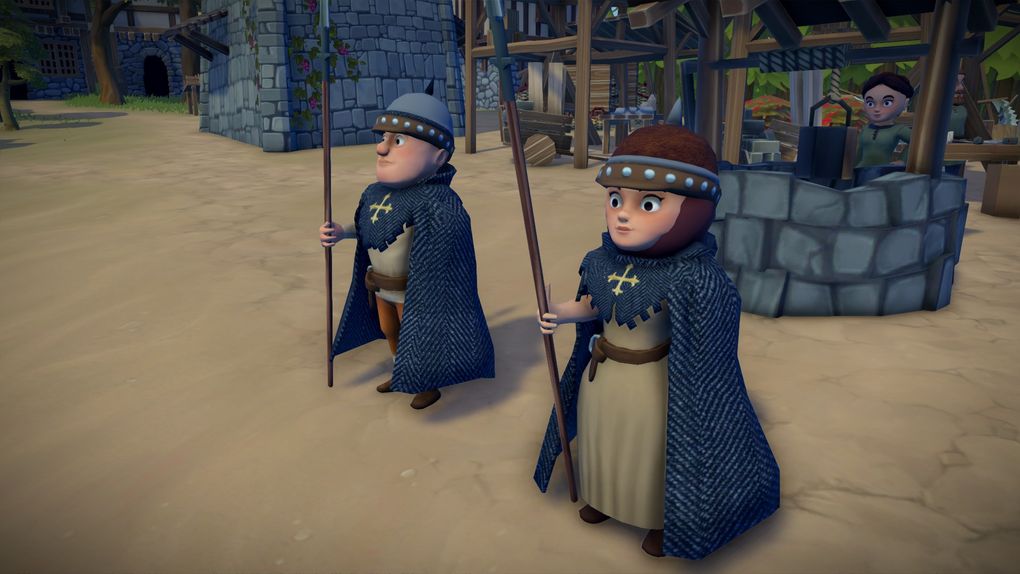
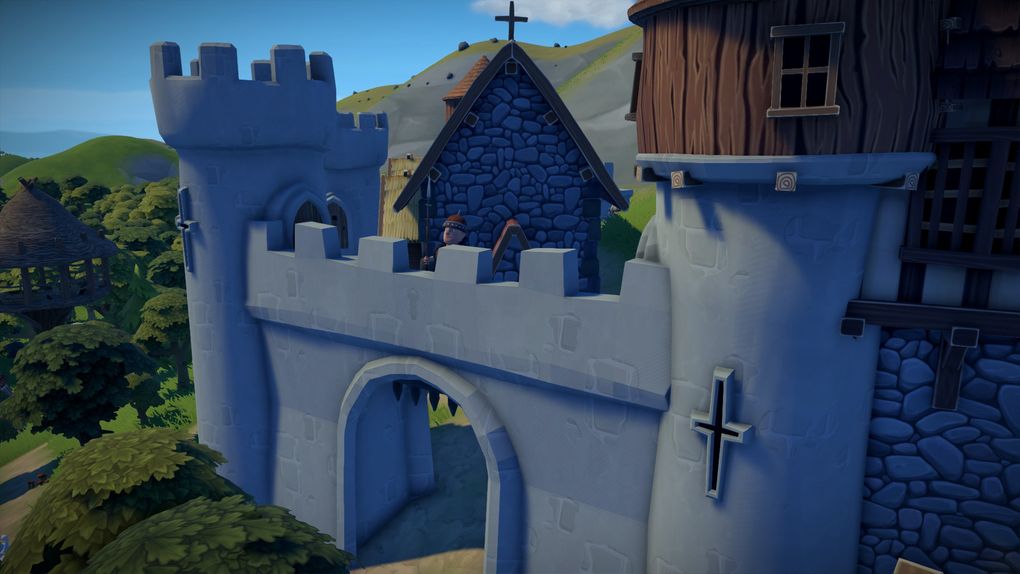
The mod also adds guard towers. Guards assigned to them will patrol the surrounding streets: a powerful deterrent to crime! You are free to change their route with special arrows placed on your territory.
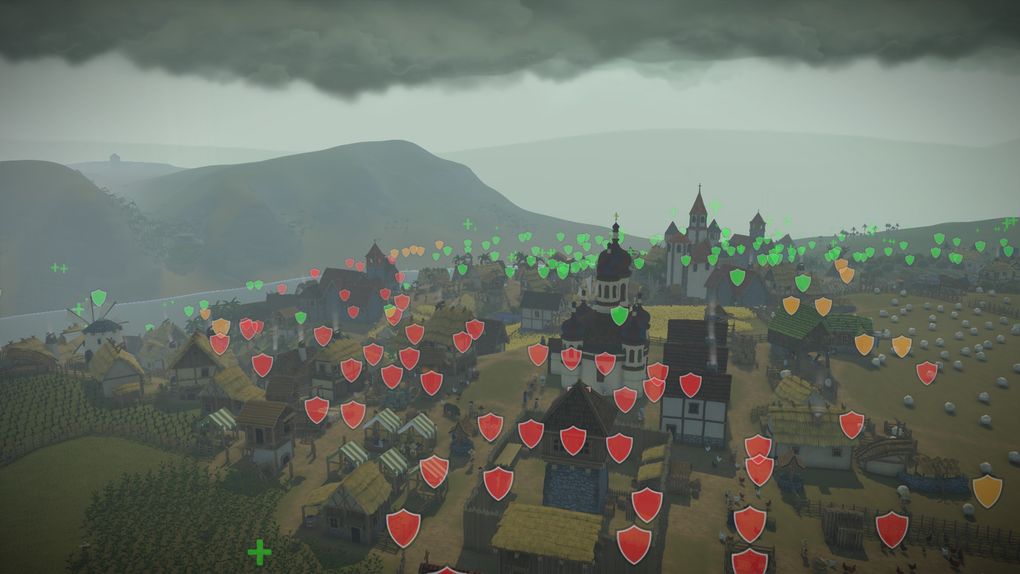
Each keep, tower, wall, barrier or guard adds to the overall sense of security in your village. It is therefore important to place them in strategic locations to prevent the crime rate from increasing.
At any time, you can check the security level of a given building by clicking on it:
Green: fully protected
Orange: prone to theft
Red: might encourage new outlaws
Outlaws
If a workplace is located too far from the above-mentioned security buildings or patrol routes, after two weeks workers will be tempted to steal food, goods and gold.
When a villager commits a crime, he becomes an outlaw. But this is not the only factor that can make them fall to the dark side: being unemployed for more than two weeks can also be the spark that leads to crime.
In this mod, villagers turn Outlaw if they are unemployed for too long or work in an area with low security. Outlaws live in forest camps and come back to the town to steal from other villagers. The player can build keeps, towers, walls and gates to increase security. Guards capture outlaws and go out on missions to destroy outlaw camps.
The genesis of the Security mod… and its future!
Mods require a ton of preparation, testing and patience. This was certainly the case with Security.
In 2021, working with another modder, Minotorious, I learned more complex modding techniques, including behaviours (making villagers act in a certain way) and how to overlay information above buildings. These made possible my second Security mod which is now available at foundation.mod.io.
While we strive to create the best possible modding environment with Foundation, there are times when creators find themselves in a bind and have to really think outside the box.
One significant obstacle I faced was how to spawn Outlaw camps away from the village but in places that the outlaws could reach. By using a behavior script I was able to send an invisible pathfinder to potential locations, to verify that outlaws could get there without being blocked by water or mountains.
Other ideas will have to wait, despite all our best intentions:
There are still more things to be done for the Security mod, once Foundation releases a few new features to modders. One would be to improve the way the player can view the security of each building, similar to how they can now see residential desirability. Another would be to zoom in on an area where outlaws have stolen something, when the player clicks a theft notification.
To conclude, Batyushki looks forward to the future of Foundation’s modding:
Even with its current limitations I am delighted at how the mod has turned out and really enjoy building my own castles, seeing the guards go on patrol, and watching the outlaws travel through the forest to their camps. Someday I hope to have entire villages of outlaws, Robin Hood style, living their own lives in the forest.
Foundation is truly a unique game and an amazing platform for modders!
Now that the holidays are decidedly behind us, it’s time to think about what the future holds.
There’s little doubt that 2022 will be a pivotal year for Foundation. We know you’re eager to learn more about the game, hence why we’re sharing an exclusive look at what’s going on behind the scenes…and hopefully answer some of your burning questions!
Laying down the cards
After three years in Early Access (time flies!), we are finally starting to see the light at the end of the tunnel. Looking back, we’re proud of what we’ve accomplished so far, but acknowledge that there’s still a lot of work left to do. Still, we’re confident that we’ll cross the finish line before long.
Our current focus is on Core Game II (1.9), which we’ve actually already talked about last year. We can’t stress enough just how much of a game changer this new release will be. We’ll have more details to share about it very soon. In the meantime, here’s some up-to-date info about the new features being worked on right now by the team for this massive update:
Gameplay Types & Progression
Prosperity
As part of our overhauled progression system, your village will now score points according to various metrics (territories, population, etc.). We’re calling this system Prosperity (which is not to be confused with Splendor). The idea behind it is to allow you, the player, to progress in the game without imposing a specific playstyle. For example, you will be able to progress by focusing on a large populated city, but you’ll also be able to progress by focusing on a prolific monastery. Aiming for higher scores isn’t just for bragging rights: you’ll unlock new buildings and put in place new politics (edicts) along the way.
Estates
The Estates are evolving and will be closely tied to different gameplay types. Each Estate will have their specific advantages over some core features of the game. For instance, the Labor Estate will fare well in villager taxation, the Clergy Estate on luxury resources and the Kingdom—you probably guessed it—on military campaigns. Also, get ready as having a high Splendor with an estate will negatively impact influence with other estates. This is just a quick overview of our intentions. More on that later!
Victory conditions
We know several players would love to see endgame content added to Foundation and 1.9 will deliver on that front. Victory conditions are late game objectives you can complete to score rare player celebrations in Foundation—and their own achievements. Pick one or more victory conditions to track and try to complete all the prerequisites…if you dare!
Narrative
If you’ve been following us on social media, you know we hired a talented narrative designer a couple of weeks ago. Core Game II will be the first occasion to see his work applied to the world of Foundation. What does that mean?
Well…we’re not ready to spill the beans quite yet, but here’s a nugget of information for you: our new narrative events aim to make your experience more open-ended. Since 1.9 redefines our global game progression, we wanted to establish the first step of what we could describe as a “dialogue” between players and Foundation. In that sense, the game will feel a lot more responsive by serving events tailored to your play style.
New onboarding
Core Game II is an opportunity for us to review Foundation’s early game and more precisely its onboarding. Since we’re introducing a lot of new features to the game, it’s important that our tutorials and in-game messaging are on point. We’ve put a lot of effort into explaining our systems and helping players understand the steps they need to take in order to build—and maintain—successful villages.
And more! Look forward to our new blog series that will delve deeper into upcoming features included in 1.9
The Core Game II (1.9) update is scheduled for release in the first half of 2022.
Looking even further
Apart from the work being done on Core Game II, our team is working in parallel on other important additions that will see the light of day before/at release. Here’s a few of them:
Residential Revamp
We are rehauling the residential experience to make it more fluid and informative while improving the game’s overall organic layout. Villagers will still build and upgrade (up to a 3rd level) houses by themselves but through blood, sweat, and tears, they’ll be better at it than ever!
Gone are the days where unused space could really hinder your village’s development. Improvements to our painting tool will help determine more precisely where districts are formed and ensure residential space (as defined by the player) is sufficient. The tool will be able to predict how many villagers can be housed within a specific zone.
Map Generator
We already gave you a glimpse of our Map Generator. Work on this feature has progressed steadily since then and is already showing promising results. We know this is one of the most anticipated features and we want to make it right, hence why we’re keeping things a bit under wraps for now.
New Terrain Biomes
One way to add more uniqueness to maps is by making sure biomes are different enough from each other. How are we going to do it? Well, for starters, we want to improve vegetation a lot—even going as far as having different vegetation depending on elevation. Think leafy on lower altitudes and coniferous on higher altitudes. What we’re not aiming for is to add tropical or desert biomes, as we feel they don’t quite fit with our design.
Accessibility
We strive to make Foundation more functional, accessible and enjoyable by all types of players. Expect even more accessibility options in the future, including improved colored text contrast and colorblind-friendly signs/feedback.
Modding
We will continue to support the modding community. One way to do so will be by exposing more real-time interactions, but we also plan to let modders edit the user interface (UI), among other things.
Quality of Life (QOL)
Delivering a smooth gameplay experience has always been a top priority for us. On that point, we can say this year will introduce a number of interesting QOL changes, included but not limited to: more tooltips, improved handling of panels and ESC key behavior, new Book shortcuts and UI customization (resize).
We are doing everything in our power to get Foundation our of Early Access before the end of 2022. We will keep you updated as we go.
Today we have the pleasure of showing off the very fresh Day – Night Cycle mod from Minotorious.
If you’ve been hanging around on our Discord, you know just how involved Minotorious is in the community. With more than 10 mods under his belt, we felt like it was time to share one of his own creations here.
Adding even more immersion to Foundation
The Day – Night Cycle mod adds a new and immersive gameplay feature to Foundation. By using a sundial (see below), you’re able to adjust various settings:
Turn the sun on or off
Set the camera shader
Set the shadow direction (default: 12 o’clock direction)
Set whether you want dynamic simulation or not
Set the dynamic simulation’s speed
The sundial needs to be built like any other building in Foundation. Keep in mind that in order to use the Day – Night cycle mod, you’ll need to install the Foundation Extended Building Functions dependency, also from Minotorious.
If you’d rather not toy with all these settings, you can instead install the automatic version which does the same thing only, well, without your input!
As is often the case with original creations, the Day – Night Cycle mod happened a bit randomly:
The Day – Night Cycle mod was more of a happy accident than something actually planned. I was checking what objects I could access inside the game that the developers had not exposed to modding yet when at some point I came across the game’s Sun. From that point on I made a little plan on how to implement the Day – Night Cycle and got to work. A few workarounds and 1-2 days later the mod and the little sundial controller started taking shape.
-Minotorious
The Day – Night Cycle mod in action
Empowering modders since day one
From the beginning, we’ve believed in community-driven content for Foundation. In fact, it’s a must for this type of game, as it adds a ton of creativity and replay value. As we’ve said in the past, we want our players to be able to let their creativity free and for them to have a platform with which they can share that creativity with the world. All of that begins with mod support.
That being said, we took the opportunity to ask Minotorious how his experience been like creating mods with Foundation.
With one word, amazing! Foundation is so simple to mod but also has so much depth if someone wishes to create something very new and very custom in it. Polymorph Games and especially Léo and Maxime are always eager to answer questions and help modders bring their projects to life. To be honest, the Day – Night Cycle mod is a prime example of the dev team listening to the modding community and implementing features we asked for. Without them implementing some methods related to attach nodes so quickly the Day – Night Controller wouldn’t have been possible at all!
-Minotorious
Aspiring modders are welcome to join our community at any given time. We have channels dedicated to mod development where members share tips and tricks along the way. Take a look, it’s worth it!
Today we are proud to announce that Foundation’s 1.8.1 update has just landed.
Following a successful and mostly incident-less preview version, we’re releasing this content a bit ahead of time.
Let’s take a tour of the new and updated features, shall we?
Resource Tracker
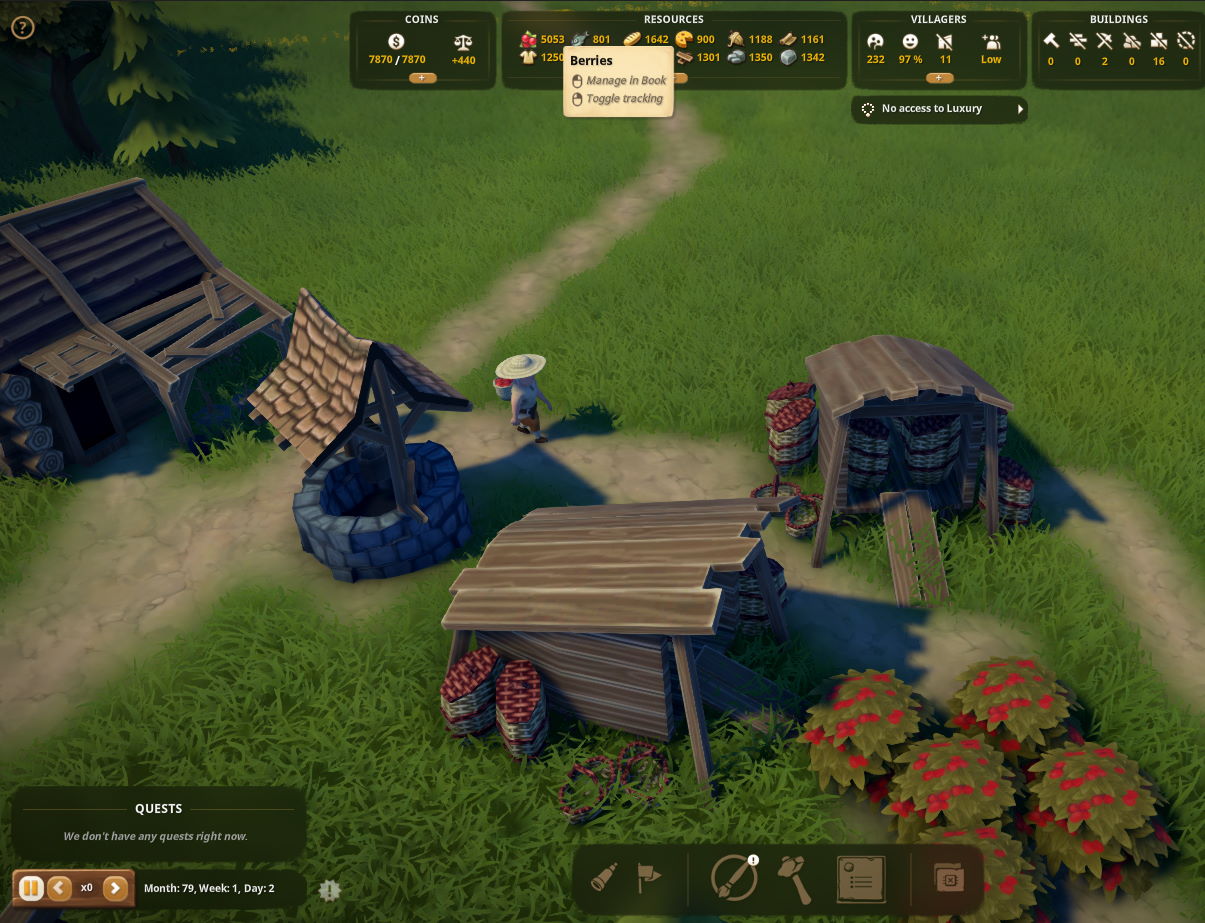
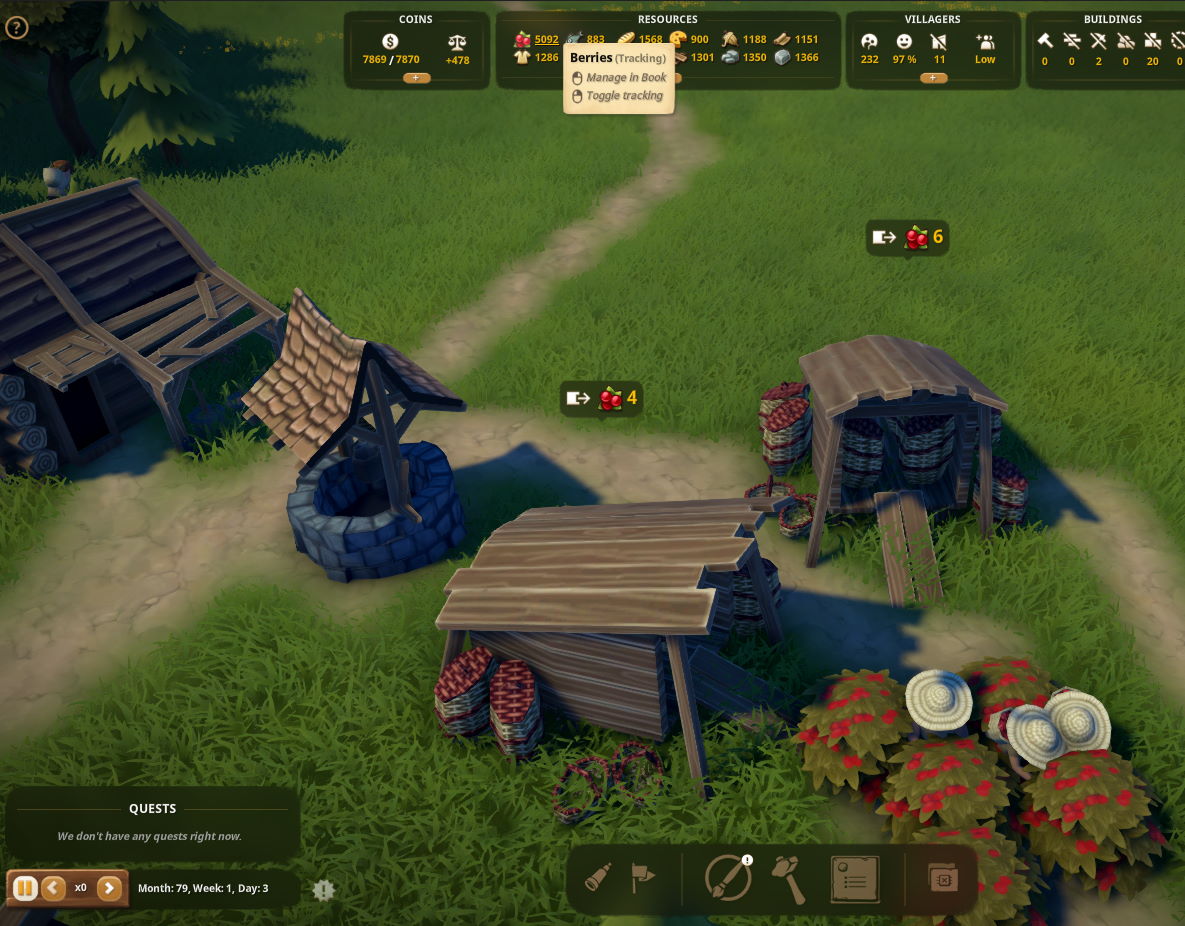
The biggest and most exciting feature added to 1.8.1 is without a doubt our brand-new resource tracker tool.
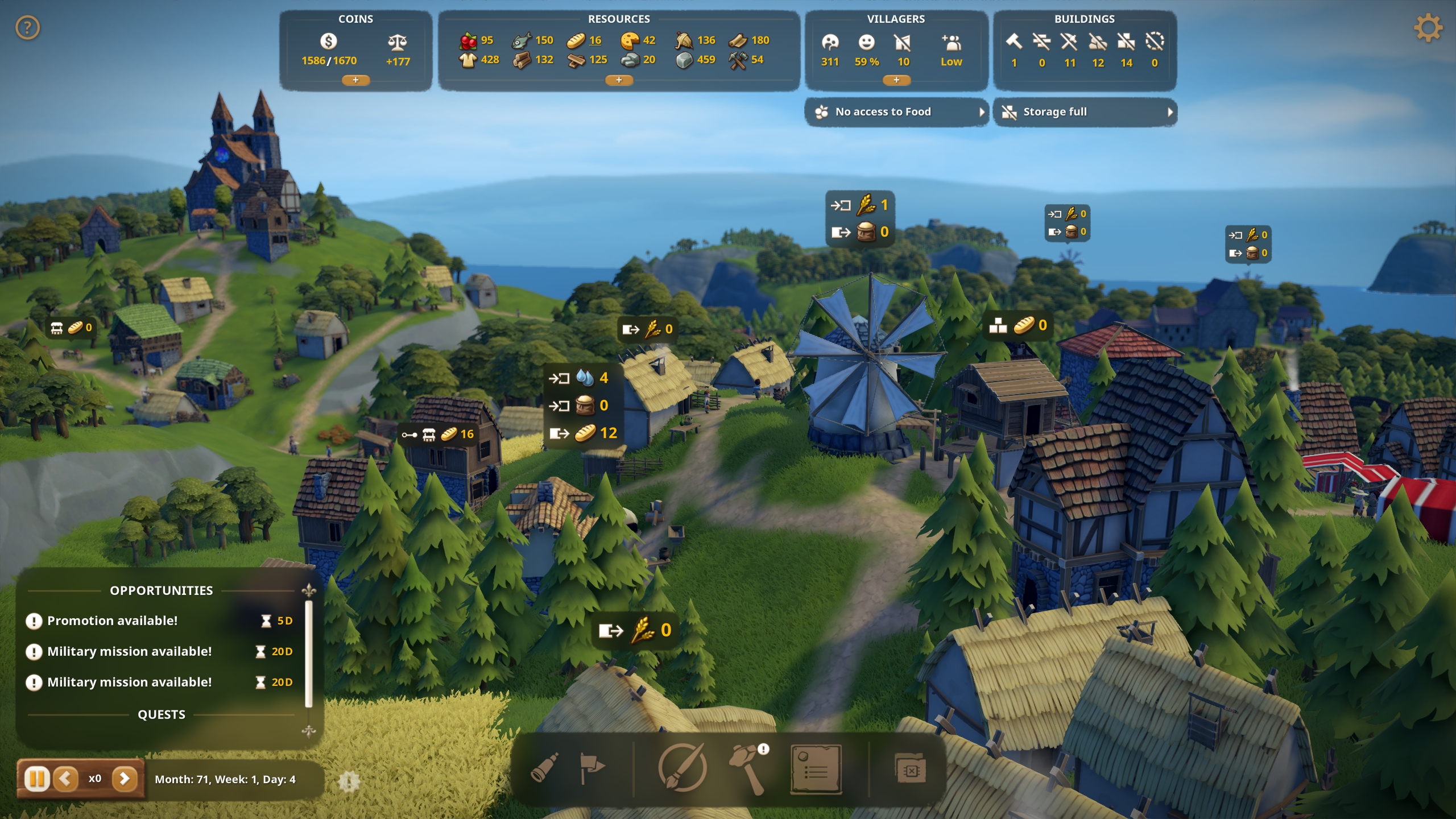
It allows you to see where resources are located in your village by right-clicking on a resource icon from the info module, located at the top of your screen.
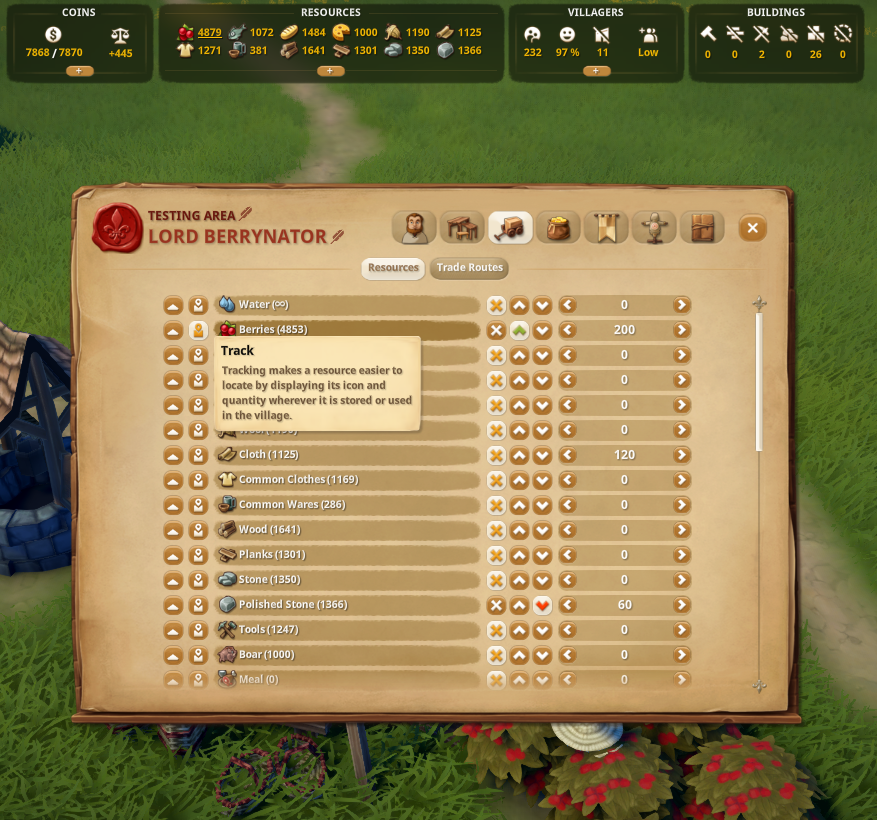
Left-clicking on the same resource will bring you to its associated entry in the Book, under the Trade tab. We are confident that this addition will make it easier to manage your village and its numerous supply chains!
Understanding Resource Icons
As we pointed out earlier, the resource tracker tool adds useful icons above entities in the world. They’re used for construction, storage, transport and production (input and output).
Here’s a quick definition of each icon type you will see in Foundation:
Resource in storage
Resource in transit
Resource production input
Resource production output
Resource available for consumption
Resource used in construction
Enhanced Construction Step Bundles
Another goal we’ve set ourselves for the 1.8.1 update was to achieve better HUD efficiency.
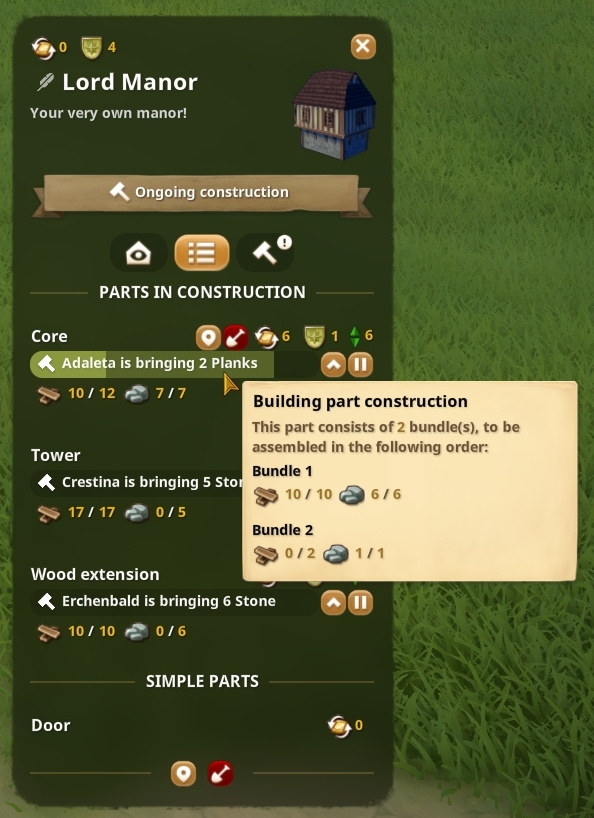
As of 1.8, we’ve added construction step bundles to Foundation. Since then, most buildings are built progressively. This feature adds a lot to the immersion and can even help you plan ahead as each step requires different resources. But we felt like there was room for improvement about how we communicated this information to you.
If you take a closer look at the above building panel, you’ll notice we now display ready-to-build bundles in the progress bar (second background layer). One of the pitfalls or the previous iteration of this feature was that it involved too much guessing. With 1.8.1, we felt the need to share more information about construction steps—clear the fog, in a way.
Modding Additions
Foundation’s mod scene is still going strong years after we first entered early access. True to our habits, we’ve worked closely with the modding community to fix bugs and crashes related to 1.8.1. But that’s not all: browsing the changelog reveals the newly added exposure of single-property types. Combined with COMP_SOLDIER, we can’t wait to see what modders will create next. As a reminder, we share our favorite mods here every Monday. The talent at work is nothing short of amazing!
1.8.1 Changelog
General
Add: Resource tracker (resource icons are shown above entities when right-clicked in info module)
Add: Resource tracker windows open entity panels
Add: Resource tracking button in the book (resources list)
Add: Shortcut from resources in info module to book
Add: Resource row highlight in the book
Add: Ready-to-build bundles are now shown in construction progress bars
Improve: Construction and Bailiff progress bars are no longer shown behind prioritize and cancel buttons
Improve: parts list and jobs ordering
Fix: color when conditions are met from green to gold (quests)
Fix: missing tooltip on delete savegame button
Fix: buildings generating resources have duplicated descriptions
Fix: missing localization on Controls window title
Fix: crash after building the Village Center is the Build menu was already opened
Fix: if there is at least one incomplete part in a multi-part monument when a reload is performed, all the parts that were previously completed will turn invisible (monuments)
Fix: walls disappear upon reload
Fix: Market Goods and Luxury tables are not unlocking
Fix: crash when building a village center
Fix: crash no crane on mineral deposit
Update: community localizations
Update: rename good and luxury market stall part set category